





‘Fielding is an attitude’: Robin Singh on Royal Desert Champions struggles, Pooran’s run-out and T10’s bat-ball balance
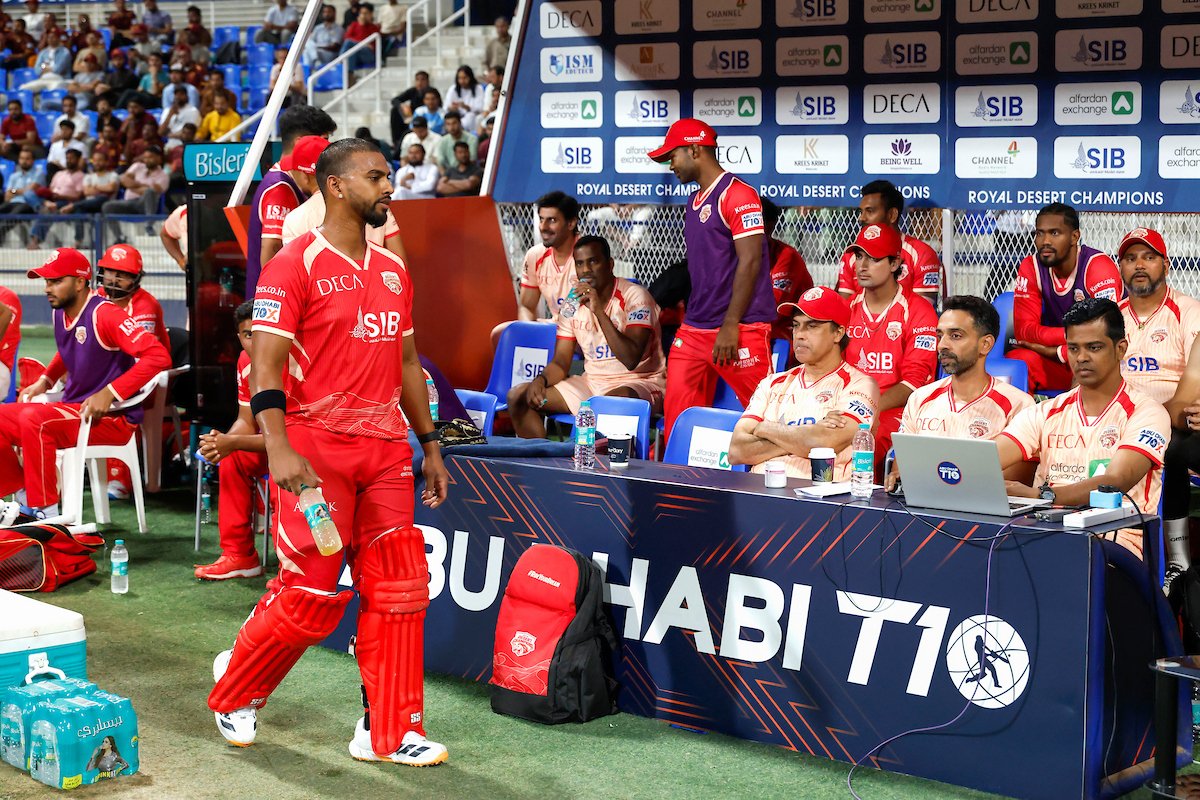
In a format where every delivery can change the course of a match, small mistakes can have significant consequences. For Robin Singh, the Royal Desert Champions’ struggles in the Abu Dhabi T10 have largely come down to missed opportunities, inconsistent performances and an inability to turn promising starts into match-winning totals.
Reflecting on his team’s eight-wicket defeat to Emirates Eagles at Zayed Cricket Stadium on Monday, the former India all-rounder and Royal Desert Champions team director identified a recurring problem throughout their campaign: a lack of consistency with both bat and ball.
“Throughout the tournament we have not really had good starts, and when we do get a start, the guys have not carried on,” Singh said.
He also pointed to injuries, fitness concerns and the failure of senior bowlers to deliver when it mattered.
“We had a few injuries, small niggles and stuff, and I think the bowlers really didn’t execute. Most of the senior bowlers didn’t really stand up.”
Singh acknowledged that the demands of the ten-over format leave little room for inconsistency, with teams needing to build momentum quickly and string victories together.
“It’s a tough tournament. You need to have some rhythm in place and win back-to-back games. That’s very important, and I think we did that only once,” he added.
Pooran’s run-out proves costly
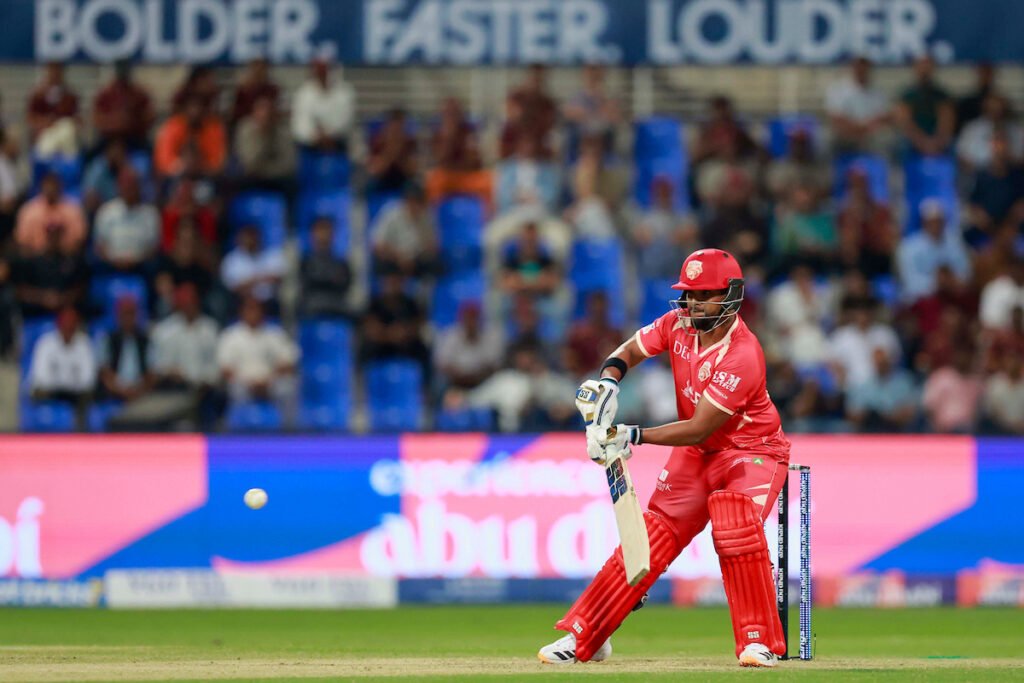
Monday’s contest offered another example of how quickly fortunes can change in T10 cricket.
Nicholas Pooran was in excellent touch, scoring 50 off just 23 deliveries, before being run out by Hardus Viljoen in the eighth over. The Champions eventually finished on 110 for four, a total that proved insufficient as Shimron Hetmyer’s unbeaten 59 guided Emirates Eagles to an eight-wicket victory with ten balls remaining.
For Singh, Pooran’s dismissal came at a particularly crucial stage, with the Champions well positioned to post a considerably bigger total.
“Everything is crucial in T10, whether it’s one ball or two balls,” he said. “At that stage we were set up to get about 130.”
Asked about Pooran’s run-out, Singh felt the batter could perhaps have made a different decision while running between the wickets.
“Probably, at the end of the day, he should have just continued running. But it’s just one of those things,” he said.
Singh calls for more recovery time
Beyond individual performances, Singh believes the tournament’s demanding schedule presents a significant challenge, particularly for bowlers who have limited time to recover between matches.
While stopping short of questioning the players’ commitment, he suggested that teams need to find ways to manage the physical and mental demands of a competition played at such a rapid pace.
“I think players need to be more committed. I’m not saying they’re not committed, but it’s quite a tough tournament to play considering you’re playing four or five games on the trot,” he said.
Singh also suggested that organisers consider introducing an additional rest day to give players more time to recover.
“It’s a tournament that’s so rapid, and it’s very difficult for anyone to come back in these sort of tournaments, especially bowlers,” he added.
Bigger boundaries could restore the bat-ball balance
One of Singh’s strongest observations concerned the balance between bat and ball in modern limited-overs cricket.
With T10 increasingly rewarding aggressive batting and power-hitting, the former Indian cricketer believes slightly larger playing boundaries could give bowlers a better opportunity to compete.
He would like to see boundary dimensions return to around 75 metres, arguing that the game needs to offer something more for bowlers and create closer contests.
“What I would like to see in cricket is the grounds a little bigger. I think it’s important to get the boundaries back to 75 metres, so there’s a little bit in it for the bowlers,” Singh said.
“It’s an uneven match as far as I’m concerned. As a cricket lover, I’d like to see a lot more bat versus ball. If you can weigh it 60/40, I think you will see a lot more close games.”
Singh also recognised how dramatically cricket has evolved since his playing days, particularly with the growing emphasis on aggressive stroke-making and the freedom to take risks.
“There’s a lot more intensity and a lot more cricket, so people are not afraid to play a lot more shots. You have a lot more opportunities to fail, and that allows you to play quite fearlessly,” he said.
“When we were playing, most of the time your focus was on 50-over cricket.”
While acknowledging that T10 offers batters opportunities to attack from the outset, Singh believes the fundamentals of the game remain important.
“Look, it’s relatively easier to play T10 cricket as long as you know how to play the game and can execute your skills. In the longer format, you will get tested in many ways,” he added.
Waseem needs to give himself time
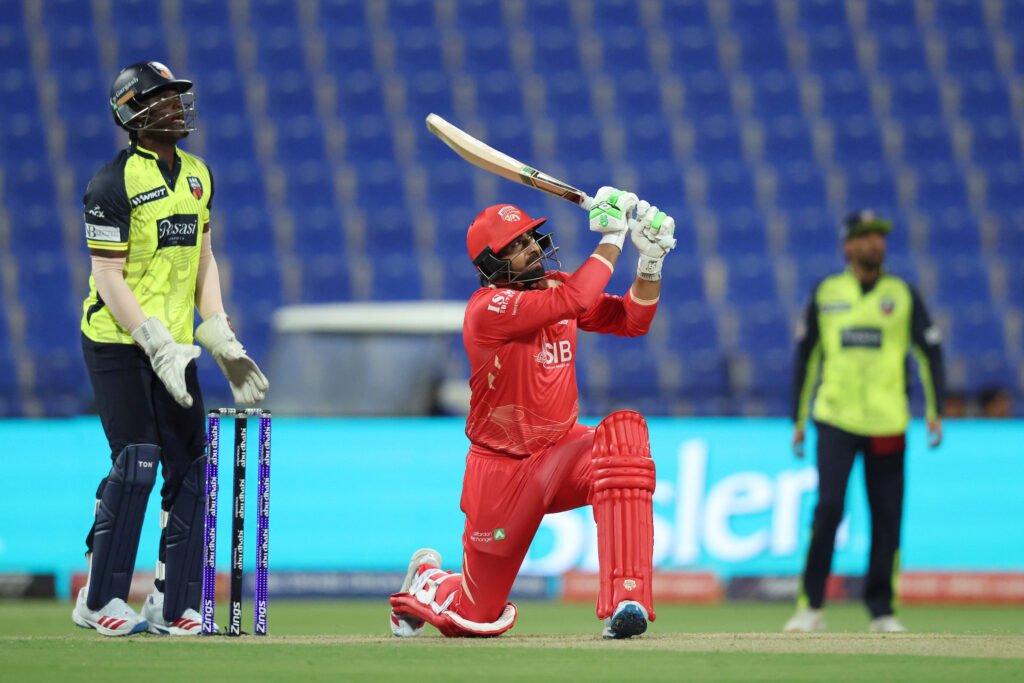
Singh was also candid when discussing Muhammad Waseem’s relatively quiet campaign with the bat.
The UAE international has struggled to make a consistent impact, and Singh believes the talented batter needs to show greater patience before attempting to dominate opposition bowling.
“I think he’s got enough opportunities to show his mettle. He has played some poor shots in most of the games that he’s got out in, so it’s really up to him. We’ve been telling him,” Singh said.
While backing Waseem’s ability, he stressed that even in a format as short as T10, batters cannot afford to abandon the basics.
“He’s a quality batter, but you have to give yourself a little time, even if it’s T10. One or two balls to have a look at what’s going on, and then back yourself to play your shots,” he added.
No obvious successor to India’s great finishers
Asked to identify India’s next great finisher, Singh was reluctant to single out an individual, although he expressed confidence in the depth of batting talent available in Indian cricket.
“No one really comes to mind at the moment. But at the same time, Indian cricket has a lot of good batters,” he said.
He also pointed out that the true quality of a batter becomes clearer when conditions offer a more balanced contest between bat and ball.
“We know Indian wickets are normally very good for batting. I think most people will get tested when it’s an even contest,” he added.
Challenges of defending totals
Fielding was another area Singh addressed, particularly after several missed catches across the tournament raised questions about the challenges of defending totals under lights.
He acknowledged that judging the trajectory and depth of the ball can become difficult during night matches, especially in T10, where batters frequently generate tremendous power.
“At night it’s not that easy to field, because it’s difficult to judge the depth of the ball. And in T10 the ball tends to travel much faster, because people are not afraid to hit it very hard. So you have to anticipate those things,” he said.
However, while recognising the technical challenges, Singh insisted that fielding standards ultimately depend on a player’s mindset and willingness to take responsibility.
“I think fielding is an attitude, to be honest,” he said.
“As a cricketer, you need to take pride. That’s all about you, not about anybody else.”
For a cricketer who built much of his reputation on athleticism and outstanding fielding, the message remains as relevant as ever. In a format where margins are exceptionally small, Singh believes commitment, concentration and pride in one’s work can make the difference between winning and losing.

Post a Comment